Kennington Station access guide for removal vans
Posted on 07/05/2026
If you are planning a move near Kennington Station, the access details can make the difference between a calm, efficient day and a morning full of awkward reversing, wasted time, and one very frustrated driver. This Kennington Station access guide for removal vans is designed to help you think through the practical side of getting a van in, stopping safely, loading or unloading, and getting back out without causing a headache for you, your neighbours, or your removal team.
Kennington is a compact part of South London, and station-area streets tend to reward good planning. A small vehicle can often be easier to position than a large one, but even a short stop needs proper thought. That is especially true if you are moving from a flat, a maisonette, or a home with tight access. In our experience, the best moves are rarely the most dramatic ones - they are the well-prepared ones.
Below, you will find a practical, human guide to using removal vans around Kennington Station, including route planning, timing, access considerations, common mistakes, and when a specialist service such as man and van in Kennington or a dedicated removal van service may be the better fit. If you are comparing options, you may also want to review pricing and quotes and the wider services overview.
Why Kennington Station access matters for removal vans
Station access is not just about whether a van can physically reach the road outside your home. It is about timing, road width, visibility, turning space, kerbside loading, and whether the move can be carried out without blocking traffic or putting anyone at risk. Around Kennington Station, those details matter more than people often expect.
Kennington sits in a busy part of London where roads can feel tighter than they look on a map. A driveway might be absent, a loading point might be shared, and the nearest sensible stopping place could be a short walk away. That is fine if the team knows what to expect. It is less fine if the driver arrives and has to improvise on the spot.
For removals, every extra minute spent hunting for a stop or repositioning a van eats into the time available for lifting, wrapping, and loading. That can affect cost, but it also affects stress. Truth be told, the stress is often the bigger issue. Nobody wants to stand outside with boxes while the van circles the block.
This is also why local knowledge helps. A company familiar with the area is more likely to understand common pinch points and street patterns. If you are still weighing up providers, a local page such as Kennington removals in SE11 can give you a clearer idea of the service footprint and the kind of jobs typically handled nearby.
How Kennington Station access guide for removal vans works
In simple terms, the process is about matching your property, your moving volume, and the road layout to the right vehicle and arrival plan. The best removal jobs near a station area usually follow the same logic:
- check the route into the street before the moving day
- confirm where the van can safely stop
- estimate how long loading and unloading will take
- decide whether a smaller van, a larger removal van, or a shuttle approach is needed
- build in time for walking distance if the door cannot be parked beside directly
That may sound straightforward, but there is always a bit of judgement involved. A one-bedroom flat with light furniture might suit a compact vehicle or a man with a van in Kennington. A family house move, by contrast, often benefits from a larger team and a more structured plan, especially if you need a house removals service.
Another practical point: access is not only about the van. It is also about what happens after the van stops. Can the front door open fully? Is there a narrow hallway? Are there stairs, a lift, or a shared entrance? These small details decide whether the move feels smooth or messy.
If you are moving furniture that is bulky or delicate, such as wardrobes, sideboards, or mirrors, it can help to look at furniture removals in Kennington. That kind of service tends to be more careful about access, handling, and protection on the approach and inside the property.
Key benefits and practical advantages
Good station-area access planning brings a few clear advantages. Some are obvious, some less so.
- Less wasted time: the driver knows where to go and where to stop.
- Lower risk of damage: fewer tight turns and fewer rushed carries.
- Better neighbour relations: less blocking of entrances, bins, or shared access.
- More accurate quoting: the removal company can price the job more realistically.
- Reduced moving-day stress: fewer surprises, which honestly makes a huge difference.
There is also a confidence benefit. When you have already thought through access, you are less likely to panic if the road is busier than expected or if the van needs to stop slightly farther away than planned. That calm matters. A move can feel chaotic enough without adding guesswork.
For renters, access planning can protect deposits by helping avoid scuffed walls or staircase damage. For homeowners, it can help keep the day on schedule, which matters if you are coordinating handover times, cleaners, keys, or storage. If that sounds familiar, you may also find value in the wider local context covered in how Kennington stands as a residential area.
And if your timeline is tight, perhaps because completion moved suddenly or a lease ended sooner than expected, same-day removals in Kennington can be a useful fallback. Not ideal for every move, but sometimes life gives you a short fuse and you just get on with it.
Who this is for and when it makes sense
This guide is useful for anyone moving near Kennington Station, but it is especially relevant if you are in one of these situations:
- you live in a flat with limited parking close to the station
- you are moving from a period property with narrow internal stairs
- you have a lot of furniture and need a larger van with careful positioning
- you are trying to avoid disruption during weekday traffic
- you are moving a student flat, shared house, or compact apartment
- you need temporary storage in the area before a final delivery
It is also relevant for landlords, letting agents, and property sellers who want a move to happen without turning the street into a bottleneck. If you are working through a sale, you might find the broader process explained in Kennington property sales process.
For students and young professionals, the access challenge is often slightly different. It is less about large volumes and more about managing awkward building entrances, tight stairwells, and a van that has to stop with minimal fuss. In those cases, a smaller vehicle or student removals in Kennington can be the sensible route.
Step-by-step guidance
If you want a move near Kennington Station to go well, start with this sequence. It is simple, but it works.
- Measure the basics. Note door widths, stair turns, lift sizes, ceiling height on landings, and any awkward corners.
- Check vehicle size needs. Decide whether a compact van, a medium removal van, or a larger truck is more realistic.
- Map the route. Look at approach roads, turning points, and any likely obstructions such as narrow bends, parked cars, or one-way sections.
- Confirm loading space. Identify the closest practical stop to the property, not the nearest theoretical one.
- Plan the loading order. Heavy items first, fragile items last, and the essentials box kept separate.
- Tell the removal team about access constraints. Share any restrictions early, even if they seem minor.
- Allow time for surprises. A neighbour may park awkwardly, a road may be busier than usual, or an entry code may take a minute to sort out. Standard London things, really.
Here is a tiny but useful example. Suppose you are moving from a second-floor flat near the station and the van cannot stop right outside the entrance. If the walk from the nearest safe stopping point is 30 to 40 metres, that changes labour time and maybe even the type of trolley or carrying equipment needed. It is not a disaster. It just needs planning.
If you need boxes, tape, wrapping, or protective materials, take a look at packing and boxes in Kennington. A well-packed move is often a faster move, and a faster move is usually a calmer one.
Expert tips for better results
Most access issues are manageable if you spot them early. These are the small things seasoned movers tend to care about.
- Visit the street at the same time of day as the move. Morning traffic and evening traffic are not the same thing at all.
- Take photos of the frontage, stairwell, or loading point. A few images can explain a lot without a long phone call.
- Keep essentials separate. Documents, keys, chargers, medication, and a kettle if you are feeling sensible.
- Protect shared areas. A runner mat or cardboard protection can be a lifesaver in narrow communal halls.
- Think in carry distances, not just road distance. Ten metres may sound tiny until you are on the third trip with a fridge box.
One useful habit is to treat access planning like a conversation, not a checklist. Speak to your removal company early and explain the odd bits: the awkward gate, the heavy plant pot by the entrance, the lift that is technically there but not exactly generous. Small details like that are the difference between "fine" and "surprisingly smooth."
If your move includes valuable or awkward items, such as a piano, it is worth going beyond a standard van service and reviewing specialist options like piano removals. Heavy, delicate, or unusually shaped items need more than muscle; they need the right handling plan.
And if you want a rough sense of cost before booking, have a look at our prices. Transparent pricing helps you compare fairly instead of guessing. To be fair, nobody enjoys guessing when a van is involved.
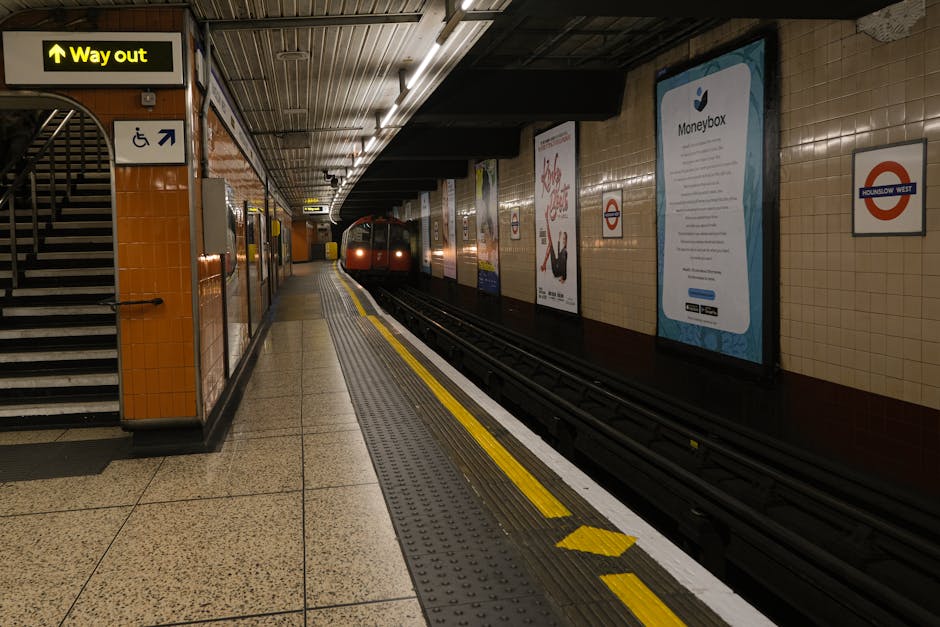
![At Kennington Station, the underground platform is illuminated by overhead lighting, showing parallel train tracks with gravel beds and a yellow safety line along the edge. The platform is sheltered by a metal canopy supported by decorative columns painted with black and yellow bands, providing shelter for passengers. On the far side of the platform, a small brick building houses ticket machines and information boards, with a person seated near the entrance. Benches are placed along the platform for waiting passengers, and the station features brick walls with large windows and advertising posters. This setting is relevant to house removals and relocation logistics, as it highlights the surrounding environment where moving vans might access the station for furniture transport or loading operations, with the platform prepared for the arrival or departure of luggage and moving boxes during a home relocation process facilitated by [COMPANY_NAME].](/pub/blogphoto/kennington-station-access-guide-for-removal-vans2.jpg)
Common mistakes to avoid
People usually do not get station-area access wrong because they are careless. They get it wrong because they underestimate how quickly small obstacles add up. Here are the main traps.
- Assuming a large van will fit easily. Streets near transport hubs can be tighter than expected.
- Forgetting about loading distance. A van parked "nearby" may still mean a long carry.
- Not checking arrival timing. Five minutes can matter if you are trying to avoid peak traffic or a school-run window.
- Leaving access details until moving day. By then, the team can only react, not plan.
- Underpacking or overpacking boxes. Both cause delays, just in different ways. Annoying, but true.
- Ignoring insurance and safety questions. You should know how your items are protected during handling and transit.
Another frequent issue is forgetting that a building's internal access can be as limiting as the street outside. A van may be perfectly placed, but if the stairwell is narrow and the lift is small, the real access problem is inside. That is where a detailed company, and not just a cheap one, earns its keep.
If you are comparing providers, it can help to read about removal companies in Kennington and the more general removal services available locally. Sometimes the right choice is not the flashiest one. Just the one that understands the street.
Tools, resources and recommendations
A few simple tools can make access planning much easier.
- Map apps and street view: useful for checking approach roads and corner clearance.
- Measuring tape: still one of the best tools in the box, frankly.
- Phone camera: take images of entrances, staircases, lifts, and anything unusual.
- Furniture protectors and blankets: especially helpful for tight hallways and door frames.
- Box labels: they save time, especially when unloading into a new flat with limited space.
For operational peace of mind, it is also wise to check the company's support pages before booking. The details matter. Insurance and safety explains how risk and protection are handled, while health and safety policy shows that the business takes safe working seriously. If you value clear handling of payments, payment and security is worth a look too.
For people moving locally who want a fuller picture of the area, it can also help to read a guide such as Kennington revealed: a closer look at one of London's most beloved suburbs. That kind of context can be handy if you are still choosing the best route, time, or service style.
If sustainability matters to you, and for many London households it does, the company's recycling and sustainability page is a sensible place to see how packing waste and unwanted items are handled.
Law, compliance, standards, or best practice
For this type of move, a lot of what matters sits in the category of best practice rather than hard public rules you should try to memorise. Still, there are sensible compliance points to keep in mind.
First, a removal vehicle should be operated in line with normal road safety expectations, including safe stopping and loading. No van should be parked in a way that creates a hazard, blocks emergency access, or leaves pedestrians squeezed into a dangerous gap. That sounds obvious, but on a busy London street it is worth saying plainly.
Second, removal work should be carried out with proper attention to manual handling. Heavy lifts, narrow staircases, and awkward furniture can all increase injury risk. A reputable company should have a clear approach to lifting technique, team communication, and property protection. You can usually tell quite quickly whether a crew knows the rhythm of the job.
Third, if your move involves a managed building, estate, or shared entrance, you may need permission or at least coordination for access, parking, lift bookings, or time windows. That is not unusual. It is often just part of good building etiquette.
Finally, terms and conditions matter more than people sometimes admit. Knowing what is included, what counts as waiting time, and how access issues are handled can save a lot of awkwardness later. The small print may not be exciting, but it does prevent misunderstandings. If you want the formal side, review the company's terms and conditions.
Expert summary: around Kennington Station, the best removal plan is usually the one that respects the street first, then the schedule, then the size of the van. Get those three things right and the rest tends to follow.
Options and comparison table
Choosing the right approach depends on how much you are moving, how tight the access is, and how quickly you need the job done. Here is a simple comparison to help.
| Option | Best for | Access fit | Typical upside | Trade-off |
|---|---|---|---|---|
| Man and van | Small flats, light moves, quick jobs | Good where streets are tight | Flexible and often efficient | Less suitable for larger household moves |
| Removal van | Standard house or flat moves | Works well with planning | More capacity and structure | May need more space to stop safely |
| Full house removals team | Family homes, multi-room moves, bulky furniture | Good if access is complex | More hands, better pace, better handling | Usually a bigger commitment |
| Storage plus delivery | Moves with date gaps or staged handovers | Useful when direct delivery is awkward | Less pressure on moving day | Requires coordination and an extra step |
As a rule, if access is tight but the volume is small, a compact service may be enough. If the access is tight and the volume is large, you probably want a more structured team with a realistic loading plan. That is where local experience really starts to earn its keep.
Case study or real-world example
Imagine a couple moving from a two-bedroom flat not far from Kennington Station. The building has a narrow entrance, the road outside is lightly parked, and the lift is small enough that a wardrobe will not fit upright. Nothing dramatic. Just the kind of move that looks easy until the van arrives.
They start by sharing photos of the doorway, stairwell, and nearby parking situation. The mover suggests a medium-sized vehicle rather than a large truck, because the route has a couple of tight turns and the team will benefit more from easier positioning than extra capacity. They also agree on an early morning arrival, before the street gets busier.
On the day, the van stops a short distance from the entrance, so the team uses trolleys and carry straps. The wardrobe is removed after protective wrapping and a careful tilt through the hallway. It takes a bit longer than if the van had been right outside, but it stays orderly. No rushing. No panicked rescheduling. Just steady work.
That is what good access planning does. It does not remove every challenge. It makes the challenge manageable.
If the move had been larger or more time-sensitive, the couple might have preferred a broader service package such as flat removals in Kennington or even a full removals service in Kennington. Different move, different answer. That is the honest way to look at it.
Practical checklist
Use this checklist in the days before your move. It is simple, but it catches a surprising amount.
- confirm the moving date and target arrival time
- measure the main furniture items and note anything awkward
- take photos of the entrance, stairs, lift, and street access
- check where a van can stop without causing a problem
- tell the company about parking restrictions or building rules
- book boxes and packing materials early
- set aside valuables, documents, and essentials
- label fragile items clearly
- confirm payment details and what is included in the quote
- if needed, arrange storage or a second delivery window
A tiny extra tip: keep a charger, mug, and a small bag of toiletries somewhere you can reach them quickly. It sounds domestic and slightly dull, but on move day those items become unexpectedly precious.
Conclusion
Moving near Kennington Station is very doable when you treat access as part of the move, not an afterthought. The road layout, van size, stopping point, carry distance, and building entrance all matter. Once those are thought through properly, the whole job becomes easier, calmer, and usually quicker too.
Whether you are moving a flat, a house, or a single bulky item, a local team that understands the area can save you time and a fair bit of stress. If you want the move to feel organised rather than improvised, that local know-how really helps. And if you are still comparing options, it is worth reviewing the broader service pages, pricing, and safety information before you commit.
Get a free quote today and see how much you can save.
Sometimes the smoothest move is simply the one that was planned with a bit of care. That is usually enough.